



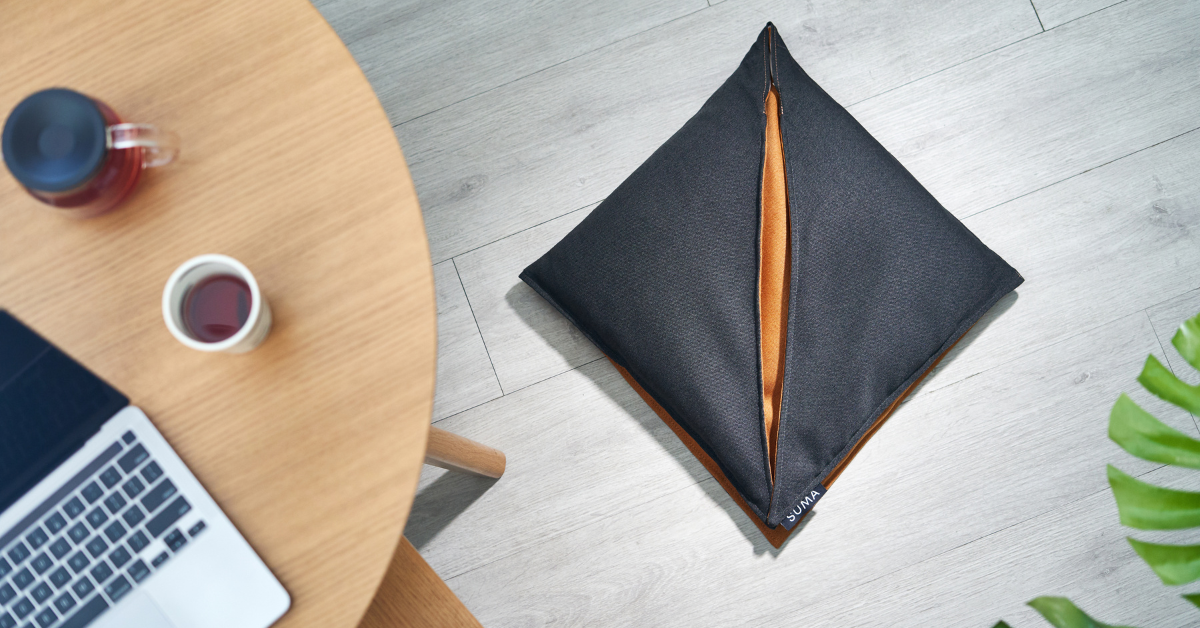
You decided to start meditating. Good. Now you've got a browser tab open with 47 different apps, three different cushions in your cart, a Reddit thread arguing about whether you need incense, and a growing sense that starting is somehow more work than the meditation itself. That's the problem with most "starter kits." They're built to sell things, not to help you sit down tomorrow morning. A real starter pack has four items. Maybe five if you're the type who likes to journal. Everything else is decoration.
What you actually need
To start a meditation practice, you need a cushion to sit on, a timer to keep track of the session, a short daily habit trigger, and some simple guidance for the first two weeks. That's it. Skip the incense, the salt lamps, the meditation-branded clothing, and any paid app until you're sure you'll actually use it.
Why most starter packs get it wrong
The meditation industry has a problem. It sells "beginner kits" that assume you're going to build a whole aesthetic around a five-minute daily habit. Beeswax candles, singing bowls, mala beads, cork mats, essential oil diffusers, decks of contemplation cards.
None of that helps you meditate. It might make your corner look pretty, but the actual practice is quiet, cheap, and requires no ceremony.
A working starter pack does one thing. It removes friction between waking up and sitting down. Every item in it exists to answer a specific question a beginner will ask in their first week.
- Where do I sit? (Cushion)
- How long do I sit? (Timer)
- When do I sit? (Habit trigger)
- What am I actually doing while sitting? (Guidance)
If an item doesn't answer one of those four questions, it doesn't belong in the starter pack. Leave it for later.
The four things that actually matter
1. A meditation cushion
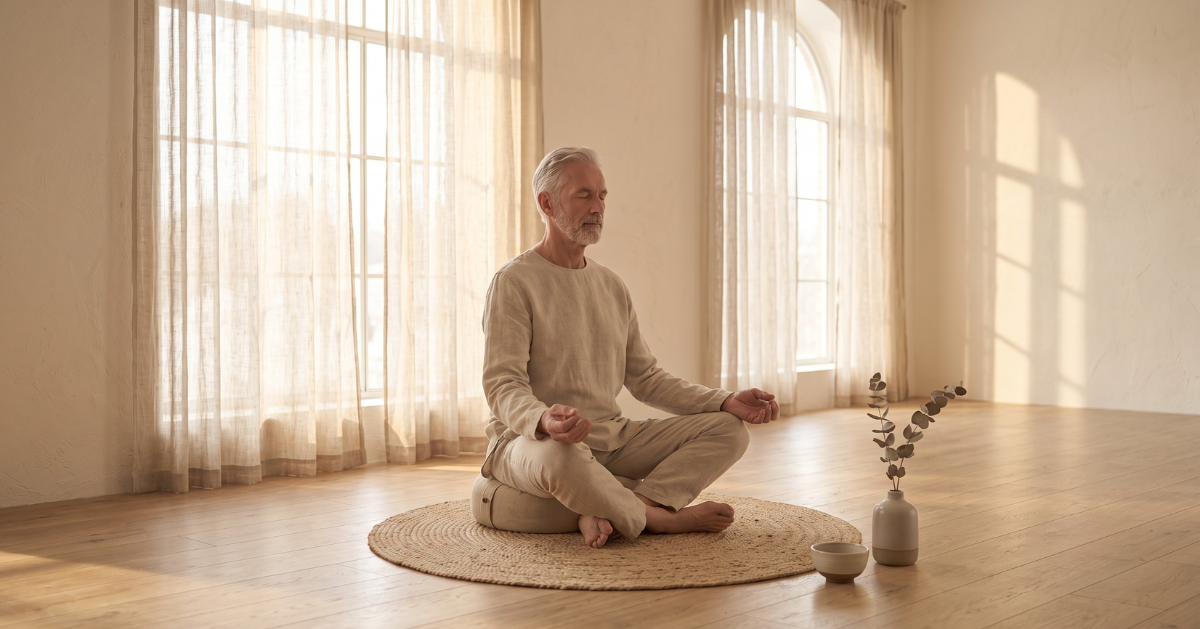
This is the single most important item. A proper meditation cushion lifts your hips above your knees, which is the whole physical reason you can sit still for 10 minutes without your back complaining. Without the right height, most beginners quit within two weeks because "meditation hurts my back," when what actually hurt was sitting on the floor with no support.
2. A timer that isn't your phone
The timer sounds like a minor detail. It isn't. The moment you use your phone as a meditation timer, three things happen. First, you see the lock screen notifications right before you close your eyes, which loads your mind up with everything you were trying to set aside. Second, if a call or message comes in during the session, you get pulled out. Third, the second the timer chimes, you're back in the phone, which means the practice ends the instant it ends. A simple analog timer solves all three.
3. A habit trigger
This is the free part of the starter pack, and it's the piece most people skip. A habit trigger is a specific existing behaviour you attach the new one to. "I meditate every morning" doesn't work. "I meditate right after I pour my first cup of tea" works. "I meditate before I open my laptop" works. "I meditate while my espresso machine is heating up" works.
Behaviour research consistently shows that attaching a new habit to an existing trigger is one of the most reliable predictors of whether the habit sticks. Journalist Charles Duhigg's The Power of Habit and Stanford behaviour scientist BJ Fogg's Tiny Habits both make the same point in different words. Anchor the new to the old.
Pick your trigger before you start. Write it on a sticky note if you have to. It costs nothing and it's the difference between a two-week experiment and a real practice.
4. Simple guidance for the first two weeks
You need someone to tell you what to do while you're sitting there. Not for the rest of your life. Just for the first 14 sessions. Three free options work well:
- The National Center for Complementary and Integrative Health has plain, no-woo guidance on meditation basics with peer-reviewed research linked throughout. Good if you want to understand what's actually happening physiologically.
- The Insight Timer app has thousands of free guided meditations without a subscription. Search "beginner" or "5 minute" and pick something with a soothing voice you don't hate. You can skip the paid features entirely.
- Mindfulness in Plain English by Bhante Gunaratana is a free book, legally available in full through the Open Buddhist University, that walks through basic breath meditation in ordinary language with no religious framing required. It's short, practical, and older than most meditation apps combined.
Pick one. Stick with it for two weeks, then decide if you want to keep going.
An optional fifth item
If you're the kind of person who processes life by writing about it, add a small blank notebook. Two minutes of writing after each session, capturing one line about how it went, builds a track record. Over three months you start to see patterns. "Sessions after coffee are more scattered." "I sit longer on rainy mornings." "My back stops hurting after week four." That kind of noticing is where the real learning happens.

What to skip on day one
A few items look useful and quietly work against beginners.
- A meditation app subscription. Wait two weeks. Use free options first. If you're still meditating after 14 days, then subscribe to whichever paid app you found yourself wanting. Signing up before you've established the habit is a common way to pay for something you use twice.
- Incense and candles. They're fine, but they add a step to the ritual. Beginners who need to light incense before they can sit down are adding friction. Once you've been sitting for a month, add incense if you like it. On day one, don't add anything you can forget.
- A separate meditation room. You don't need one. A corner is enough. Sometimes just a chair by a window. The people who wait until they have "the right space" to start often never start.
- Books about meditation theory. They're great once you're a few weeks in. On day one, they're a way to feel like you're meditating without actually sitting down. Save the reading for after you've built the habit.
- Special clothing. Loose clothes are helpful. Meditation-branded clothes are marketing.
- Guided meditations longer than 10 minutes. For the first two weeks, use 5 to 10 minute recordings. Longer sessions before your body and attention are ready is one of the top reasons beginners quit.
A simple 14-day plan
Days 1 to 3. Sit on your cushion for 5 minutes each morning after your habit trigger. Use a guided meditation from Insight Timer or read a chapter of Mindfulness in Plain English and just follow your breath.
Days 4 to 7. Same setup, 5 to 7 minutes. Notice whether you're doing it at the same time each day. If not, adjust the trigger. The trigger is what's failing, not you.
Days 8 to 14. Extend to 10 minutes when 5 feels genuinely easy. Not before. If 5 still feels hard, stay there for another week. There's no rush.
By day 14 you'll have your answer. If it's yes, there's nothing else to buy.
Conclusion
The whole starter pack fits on a small square of floor. A cushion, a timer, a trigger, and a book or app. That's the practice you're actually buying into. Everything else waits. The apps can come later. The perfect corner can come later. What matters tomorrow morning is whether you sit down for five minutes and follow your breath. Do that, and two weeks from now you'll know if this is for you.
Frequently asked questions
Do I really need a meditation cushion to start?
You can start on a folded blanket, but you probably won't continue. Beginners who sit on inadequate surfaces mostly quit within three weeks because of back or knee pain. A proper cushion is the single biggest predictor of whether a practice sticks past the first month, and it's the one item worth paying for.
Which SUMA cushion is better for a beginner?
The SUMA Classic if you can sit cross-legged comfortably or want to learn to. The SUMA Fold if your hips are tight, you prefer kneeling, or you want the option to change positions. Both use the same hypoallergenic buckwheat fill and Oeko-Tex 100 certified cover.
Do I need to sit cross-legged?
No. You can meditate on a chair with your feet flat, on a bench in the kneeling seiza position, or lying down for a body scan. What matters is that your spine is upright and your body isn't in pain. Cross-legged sitting on a cushion works well for most people, but it's not the only option.
Is a meditation app worth the subscription?
Sometimes. Free apps like Insight Timer have enough content to last months. Paid subscriptions to Calm, Headspace, or Waking Up become worth it once you've been meditating for a few weeks and know what style of guidance actually helps you. Buying one on day one is a common mistake.
How long should I meditate as a beginner?
Start with five minutes daily. Extend by one minute per week only when the current length feels genuinely easy. Most beginners land around 10 to 15 minutes as their natural session length. Anything longer than that early on tends to lead to quitting.
What time of day is best?
Morning, before the day's noise starts. But the best time is whenever you'll actually do it. If mornings are chaotic, do it at lunch or before bed. Consistency beats optimisation.
What if I fall asleep?
Common in the first two weeks, especially if you're doing body scans lying down. Sit upright instead. Splash cold water on your face beforehand. Meditate after coffee, not before. If you consistently fall asleep sitting up, you're probably not sleeping enough at night, and that's the actual problem to fix first.
Do I need incense, candles, or other props?
No. Some people enjoy them and they can help mark the space as "not for work." But none of them are required. Start without them, and add them later only if you actually want to.

Leave a comment
All comments are moderated before being published.
This site is protected by hCaptcha and the hCaptcha Privacy Policy and Terms of Service apply.