



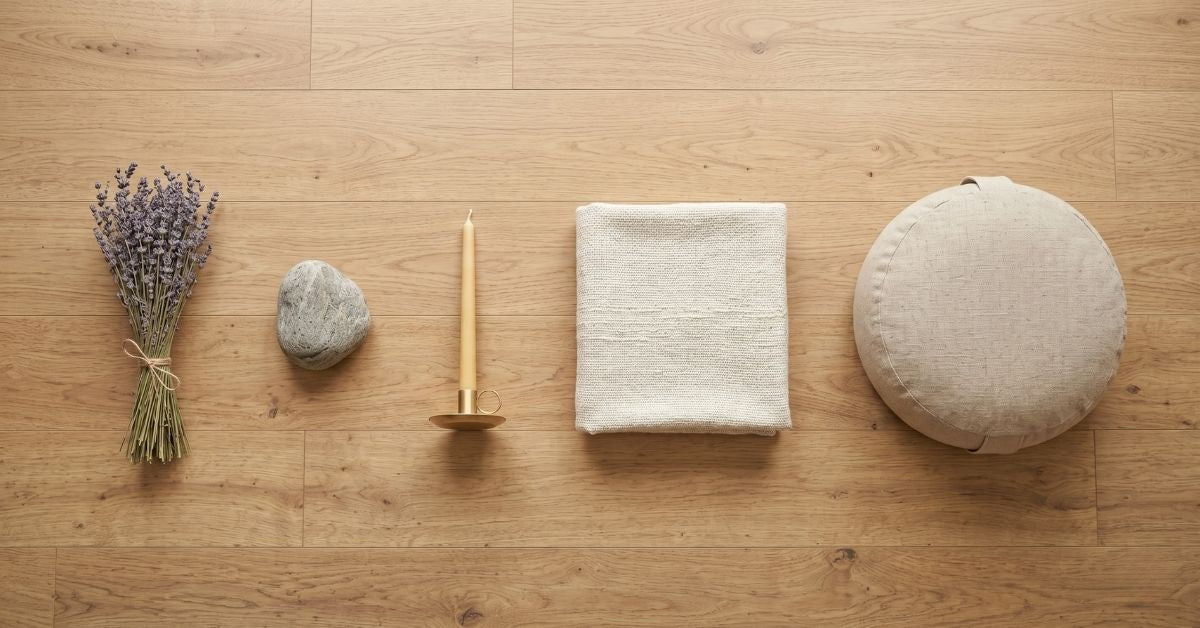
There is a corner in a lot of homes that quietly collects things. An exercise bike draped in laundry. A shelf of books no one reads. A floor space that gets described as "wasted" at every dinner party. Most people know, somewhere in the back of their minds, that this corner could become something better, a simple meditation space at home they'd actually return to. They just never quite get there.
Not because they don't want to meditate. But because getting started feels more complicated than it is. This guide is a practical, research-backed walkthrough for creating a minimalist meditation corner that looks good in a modern home, fits even the smallest apartment, and most importantly becomes part of your daily routine.
Why your environment matters more than your willpower
You can technically meditate anywhere. But research consistently shows that dedicated meditation spaces create psychological anchors, the brain begins to associate that specific spot with slowing down. Over time, simply sitting there signals your nervous system to shift gears. The deliberation disappears. The practice just happens.
This matters because mindfulness and meditation produce genuine, measurable changes: reduced cortisol levels, lower anxiety, improved sustained attention, and better emotional regulation. A well-designed minimalist meditation room or corner removes the friction between intention and action. You don't have to want it every morning. You just have to sit down.
Choosing the right spot in your home
You do not need a spare room. Interior designer Jeremiah Brent puts it plainly: it's less about the size of the space and more about prioritising an area where you can focus on yourself, even for five minutes a day. A bedroom corner, a sectioned-off living room nook, or a quiet end of a hallway all work.
What to look for:
- Relative quiet, not silence, but away from main household traffic
- Natural light, east-facing for morning practice is ideal
- A defined boundary, a rug, a screen, or two walls marking the corner
- Visual calm, minimalist spaces are more conducive to relaxation than cluttered ones
Research on clutter and cognitive load confirms that visual noise competes for your brain's attention. Your meditation corner for small spaces should feel like a breath of fresh air the moment you look at it.
The five essentials for a minimalist meditation space
1. The right cushion — the non-negotiable
Everything else in your setup is context. The cushion is what your body is in contact with for every session. Physiological research is clear on what works: a forward tilt of 4–5 degrees positions the pelvis slightly ahead of the sit bones, naturally maintaining the lumbar curve without muscular effort. Buckwheat-hull fill conforms to the body, holds its shape, and doesn't retain heat, making it the most effective filling for ergonomic meditation cushions for back support.
For people setting up a meditation starter space for the first time, a foldable or angled cushion design is worth considering, it offers multiple sitting positions (cross-legged, kneeling, half-lotus) without needing additional equipment. Ideal for comfortable meditation solutions for beginners and for small spaces.
2. A natural-fibre floor rug
A small meditation mat or natural-fibre rug, jute, cotton, or wool, defines the boundary of your space and adds warmth underfoot. It's also the first minimalist home meditation accessory that signals, visually, that this corner is different from the rest of the room. A flatweave in a neutral tone works best for a modern meditation decor aesthetic.
3. Soft, warm lighting
Overhead lighting is too activating. A small lamp with a warm bulb, a beeswax candle, or a salt lamp creates the mood shift that supports the mental one. Colour temperature research shows dim, warm-toned lighting evokes calm; bright white light does the opposite. This is one of the simplest home meditation space ideas with the largest practical effect.
4. One consistent scent
Scent is the most direct route to emotional states. A single scent used consistently becomes its own contextual cue. Sandalwood, lavender, or frankincense, pick one, use it every session, and within a few weeks your brain will begin preparing for stillness before you even sit down.
5. One meaningful object — maximum
A small plant, a smooth stone, a piece of art that genuinely calms you. One. The operating principle of a minimalist meditation nook is that empty space is not wasted space, it is the point. Negative space as a design element keeps the visual field settled rather than stimulated. Resist the gradual accumulation of things.

Getting the aesthetic right for a modern home
A minimalist meditation corner doesn't require a specific style. Japandi meditation space design, Scandinavian neutrals, earthy wabi-sabi, any works as long as it follows the same principles: fewer objects, natural materials, muted palette. Soft blues, sage greens, warm beige, and off-whites are consistently associated with lower arousal states. Wood, linen, cotton, and bamboo feel warmer and more grounding than synthetics , this is why the most calming home decor tends to rely on them entirely.
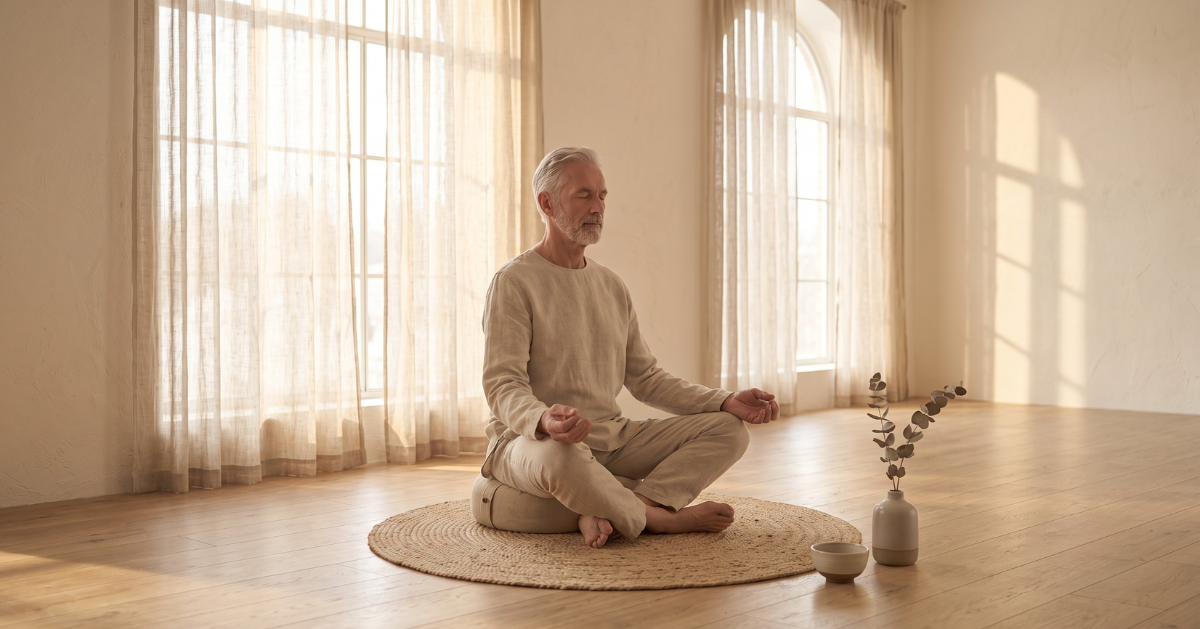
If you're working with a small meditation space or a meditation corner for apartment living, the portable setup works beautifully: a rug, cushion, candle, and plant kept in a small basket, assembled each morning and packed away in two minutes. The physical objects are the triggers. They don't have to be permanent.
Building the habit: what actually makes it stick
A beautiful home meditation setup that never gets used is just meditation decor. The goal is daily practice. Three things make the difference:
- Stack it onto an existing habit. Meditating right after your morning coffee means you never have to decide, it simply follows the other thing. Decision fatigue is real.
- Start shorter than feels right. Five minutes is a complete meditation session for beginners. A five-minute daily practice sustained for months does more for your nervous system than thirty minutes you abandon after two weeks.
- Don't judge the session. The wandering mind is not a failure, noticing it and returning to the breath is the practice. That is, literally, how neuroplasticity builds.
Conclusion
Somewhere in most homes there is space for this. Not a redecorated room or a spare bedroom. Just a corner, two walls, a floor, and a few objects chosen with intention.
The practice is simpler than the setup. Sit, breathe, notice when your attention wanders, return. That is the entire instruction. What the right space does is remove the last remaining excuse to not begin.
You don't have to meditate for an hour. You don't have to feel calm before you sit down. That is what the sitting is for. You just have to show up to the corner, most days, and let the rest follow.
Most people already have one. They just haven't set it up yet.
Frequently asked questions
Do I need a special meditation cushion or can I use a regular pillow?
A regular pillow compresses and doesn't provide the forward tilt the body needs. After ten to fifteen minutes, most people experience the back discomfort that discourages practice. A buckwheat hull cushion — filled with husks that conform to the body and hold their shape — is a meaningfully different experience. It's the single most effective floor seating upgrade for meditation you can make.
What is the minimum space I need for a meditation corner?
Roughly 1 metre by 1 metre. Less if you kneel rather than sit cross-legged. What matters is that the space feels clear, not cramped. A corner of a bedroom is genuinely enough.
How long before meditation makes a noticeable difference?
Most people notice something within two to three weeks of daily sessions. Peer-reviewed meta-analyses show measurable changes in stress markers, anxiety, and mood after four to eight weeks of consistent practice.
Can children use the same space?
Yes, and it's one of the unexpected benefits of creating a family mindfulness space at home. Children who observe adults meditating regularly tend to become curious and mimic the practice. A smaller kids' meditation cushion nearby, and a quiet agreement about the space, is often all it takes. The Good Trade writes about this exact experience, the meditation corner becoming what the family needs it to be, when they need it most.


Leave a comment
All comments are moderated before being published.
This site is protected by hCaptcha and the hCaptcha Privacy Policy and Terms of Service apply.